The first cold morning of winter is when most gas geysers decide to stop working. The good news: in most homes, the cause is one of a handful of simple, well-known faults. The bad news: gas is not something to experiment with.
This guide covers the 8 problems seen most often in Pakistani gas geysers, what each one means, what you can safely check yourself, and when to stop and call a technician. It is based on real repair work, so the order below is roughly how common each problem is.
First: If You Smell Gas
- Close the gas valve at the geyser and at the main meter.
- Open doors and windows.
- Do not switch any light, fan or appliance on or off, and do not light a match.
- Leave the area and call your gas company’s emergency helpline (SNGPL/SSGC: 1199) or a qualified technician.
Everything below assumes there is no gas smell.
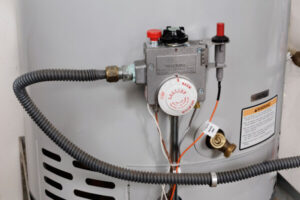
1. Pilot Lights but Goes Out When You Release the Knob
Most likely cause: a faulty thermocouple, the thin copper rod sitting in the pilot flame. Its job is to keep the gas valve open only while the pilot is burning.
What you can check: make sure the pilot flame actually touches the tip of the thermocouple. A weak or bent flame won’t heat it enough.
Fix: thermocouple replacement, usually PKR 1,200–2,500 including labour. A full gas valve replacement is rarely needed for this symptom.
2. Pilot Won’t Light at All
Common causes: no gas or very low pressure (check if your stove works), air in the line after a long gap, or a blocked pilot nozzle from dust and rust.
Fix: if the stove works, the pilot nozzle needs cleaning, around PKR 800–1,500.
3. Pilot Is On but the Main Burner Won’t Start
Check first: is the temperature knob turned up? If the water is already at the set temperature, the burner won’t start. Turn the knob higher and open a hot tap.
If it still doesn’t light: the thermostat/gas control valve may be faulty, or the burner holes are blocked. Valve replacement costs PKR 4,000–9,000 depending on brand.
4. Water Is Lukewarm or Takes Very Long to Heat
Most common in Pakistan: low gas pressure in winter, especially in the morning and evening. If your stove flame is also weak, the geyser isn’t the problem.
Other causes: a thick layer of mud and scale at the bottom of the tank (it insulates the water from the flame), a dirty burner, or a broken dip tube.
Fix: flush the tank (see our geyser flushing guide) and clean the burner. If gas pressure is the real issue, a dual gas + electric geyser is the long-term answer.
5. Yellow or Orange Flame, Soot, or Black Marks
A healthy flame is blue. Yellow means the gas isn’t burning properly, which produces soot and carbon monoxide.
Causes: dirty burner, blocked air openings, or a blocked flue/chimney.
What to do: stop using the geyser until the burner and flue are cleaned, usually PKR 1,500–3,000. Do not ignore this one.
6. Rumbling, Popping or Knocking Sounds
Cause: sediment at the bottom of the tank. Water trapped under the layer boils and bursts through it. It is not dangerous by itself, but it wastes gas and shortens the tank’s life.
Fix: flushing the tank. If done every year before winter, the noise usually never comes back.
7. Water Dripping From the Side Pipe
That pipe belongs to the pressure relief valve. Occasional drips can be normal when the water heats up. Constant dripping means the thermostat is overheating the water or the valve itself is worn.
Important: never block or cap this pipe. It is the only thing stopping the tank from building dangerous pressure. Valve replacement costs PKR 1,200–2,500.
8. Rusty or Smelly Hot Water, or a Leaking Tank
Rusty or rotten-egg smelling water usually means the anode (magnesium) rod is finished. Replace it before the tank starts rusting through. Our anode rod guide explains how.
If water is leaking from the tank body itself, the tank has corroded. This generally can’t be repaired reliably; it’s time to compare new geyser prices.
Repair Cost Summary (Pakistan, 2026)
| Problem | Usual Fix | Approx. Cost (PKR) |
|---|---|---|
| Pilot goes out | Thermocouple | 1,200 – 2,500 |
| Pilot won’t light | Nozzle cleaning | 800 – 1,500 |
| Burner won’t start | Gas valve / thermostat | 4,000 – 9,000 |
| Yellow flame / soot | Burner + flue cleaning | 1,500 – 3,000 |
| Noise, slow heating | Tank flushing | 1,500 – 3,000 |
| Side pipe dripping | Relief valve | 1,200 – 2,500 |
| Rusty water | Anode rod | 2,000 – 4,000 |
Typical market ranges; branded original parts cost more. Always agree the price before work starts. For what each part does, see our geyser parts guide.
What You Can Safely Do Yourself
- Relight the pilot following the instructions printed on the geyser.
- Check gas pressure by looking at your stove flame.
- Test joints for leaks with soapy water (bubbles mean a leak: close the valve and call a technician).
- Adjust the thermostat knob to medium.
- Flush the tank, if you are comfortable following the steps carefully.
Leave These to a Technician
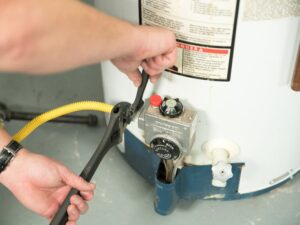
- Anything involving opening gas connections or replacing the gas valve
- Flue and chimney problems
- Any gas smell, soot, or yellow flame
- Tank leaks
Before-Winter Checklist
- Flush the tank.
- Clean the burner and pilot; confirm a blue flame.
- Check the chimney is clear and firmly fixed.
- Soap-test all gas joints.
- Check the anode rod if it’s been 2–3 years.
Frequently Asked Questions
Gas geyser ka pilot bar bar kyun bujhta hai?
Zyada tar thermocouple kharab hota hai, ya pilot ki flame us tak theek se nahi pohanchti. Gas pressure girne aur tez hawa se bhi pilot bujh jata hai.
Geyser ki flame peeli kyun hai?
Burner ya chimney gandi hai aur gas poori tarah nahi jal rahi. Yeh carbon monoxide ka khatra hai; geyser band kar ke service karwayein.
Geyser se awazein kyun aati hain?
Tank ke neeche mitti aur scale jam gaya hai. Tank flush karne se yeh awaz aam tor par khatam ho jati hai.
Gas ki boo aaye to kya karein?
Gas valve band karein, khirkiyan kholein, koi switch na chhuen, aur gas company ki helpline 1199 ya technician ko bulayein.