Carpenter Pencils: Purpose, Types and How to Use Them
When it comes to marking timber, concrete, and other rough job-site surfaces, carpenter pencils are among the most reliable tools a tradesperson can carry. Their flat shape, durable lead, and ease of handling make them essential for carpenters whether you’re working on commercial carpentry or detailed finish carpentry.
If you are starting a trade and exploring career options, you may also compare fields like woodworking and electrical work learn more here:
Carpenter vs Electrician – Which Trade Is Right for You?
What Makes Carpenter Pencils Unique?
A carpenter pencil stands apart from a regular round pencil because of its rectangular or flat body and extra-strong lead. The flat shape prevents it from rolling off sloped surfaces a significant advantage at furniture shops construction sites or during residential carpentry tasks.
Learn more about the different work environments:
Commercial Carpenter vs Residential Carpenter
Carpenter pencils were developed specifically to mark rough materials like timber, stone concrete and drywall situations where a normal pencil would break or create weak lines.
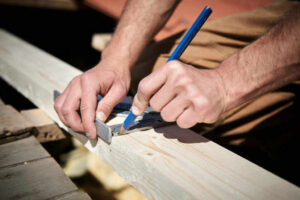
Purpose and Common Uses
Key Applications
- Marking lumber for measurement and cuts
- Fine layout marking for finish carpenter tasks
- Marking on rough or uneven surfaces
- Scribing curves or shapes
- Spacing during decking or cabinet alignment
Want to explore trimming and fine woodworking?
Finish Carpenter vs Trim Carpenter
Additionally, carpenter pencils serve well during furniture restoration. If you are getting repairs or designing new pieces:
Carpenter Services for Furniture Repairs
Types of Carpenter Pencils
Carpenter pencils come in three primary types:
1. Flat Carpenter Pencils the Old Way
Built to last with a wood frame, this tool is perfect for most tasks on the job site.
2. Carpenter Pencils with Motors
Great for precise work, and it’s easy to refill or sharpen.
3. Colored Carpenter Pencils
For marking darker materials or when lines must stand out.
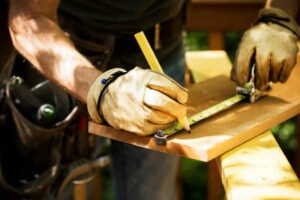
How to Use Carpenter Pencils
Proper Sharpening
Because of the pencil shape, a utility knife is usually used to sharpen it. Create a chisel-shaped tip to draw fine or bold lines depending on your angle.
Marking Techniques
- Use the flat edge for bold marks
- Use the narrow edge for precision lines
- Drag the pencil along a straight edge or angle square
- Scribe curves by tracing the material’s edge
Choosing the Right Carpenter Pencil
Ask yourself:
- Do I need bold or precise lines?
- Will I work mostly on lumber or fine furniture?
- Do I prefer wood casing or a mechanical system?
For people entering the field and learning tool selection as part of training:
Carpenter Apprenticeship Programs – Skills, Pay & Opportunities
If you are planning to start your carpentry career soon and want to understand requirements, skills and earnings:
How to Become a Carpenter in 2025
Care and Maintenance
- Keep multiple sharp pencils available
- Use color coding for purpose
- Store safely in your tool belt
- Replace when short or repeatedly breaking
If you encounter carpenter ants damaging your woodwork or workshop, here’s a helpful guide:
How to Get Rid of Carpenter Ants
When Insurance Matters
Carpentry tools and workshops face risks like fire, workplace injury, and wood-damage pests. 1Insurance safeguards your carpentry business and equipment.1
Learn more:
Carpenter Insurance Explained for Small Business Owners
Where Carpenter Pencils Fit Into Furniture Craft
From layout marks to curve tracing, carpenter pencils are invaluable in designing or building interiors. If you want DIY creativity inspiration:
Carpenter Furniture Ideas
Conclusion
Whether you are a hobbyist or a professional carpenter, carpenter pencils are essential. Their flat shape, durable lead and ability to mark everything from structural wood to fine furniture make them indispensable across the trade.
Questions That Are Often Asked
Q1: What do you do with a carpenter pencil?
A carpenter pencil can be used to make marks on rough surfaces like concrete, wood, drywall, and more. It holds its shape well because it’s flat, so it won’t roll around while you’re building or working with wood.
Q2: Why do builder pencils have a flat top?
You can use a carpenter pencil on a sloped surface without it rolling off which is very useful on the job. The flat form is also easier to hold and lets you mark in different thicknesses based on the angle.
Q3: Can I not use a carpenter pencil but a normal pencil instead?
Yes, but regular pens don’t last as long, break more easily, and don’t leave good marks on rough floor. For building and construction, carpenter pencils make lines that are easier to see and are easier to hold.
Q4:How do you sharpen a carpenter pencil?
You may use a regular knife or a tool made just for that purpose. Most builders like to use a knife because it has a chisel-shaped tip that lets them make both thick and thin lines.
Q5:What kind of lead is used in carpenter pencils?
The graphite leads in carpenter pencils are bigger and stronger so they can handle rough surfaces and pressure. Depending on how long they need to last and how visible they need to be, they usually come in hard (H) or soft (B) lead types.